Your Self-concept Generates Everything: Wealth, Abundance, Love, Relationships...
Why Your Self-Concept is Your Net Worth: The Hidden Psychology of Wealth Creation
Your self-concept shapes your net worth more than hard work alone. Discover how emotional identity, money mindset, and hidden beliefs about wealth affect financial success. Break free from self-sabotage, scarcity, and shame to unlock true wealth creation and lasting prosperity.
Tal
8/28/20256 min read
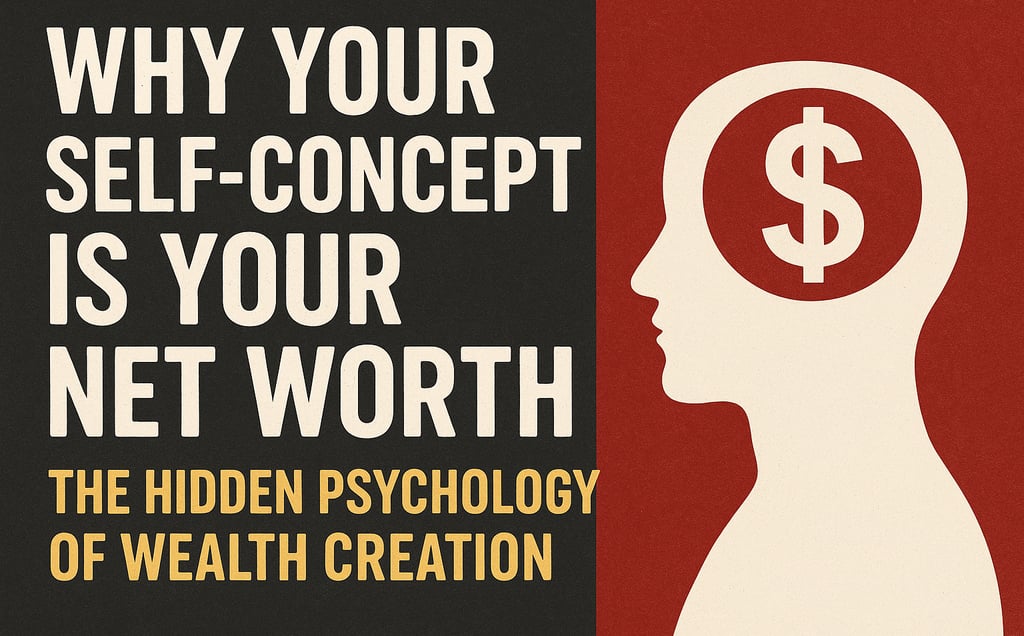
Why Your Self-Concept is Your Net Worth: The Hidden Psychology of Wealth Creation
Most people think they want to be rich. They dream of financial freedom, abundance, and a life without limits. But here’s the brutal truth: your income will never exceed your identity.
They fail because of a lack of identity.
Yes—you read that right.
The harsh truth is this: you don’t earn what you want, you earn what you are.
That number sitting in your bank account right now? It’s not a reflection of your talent, your potential, or your dreams. It’s a mirror of your self-concept—the internal identity you’ve built about who you are, what you deserve, and what kind of wealth feels “safe” for you to hold.
And until you face this invisible glass ceiling, no amount of hustling, saving, or financial hacks will change your destiny.
Your bank account is not just a reflection of your skills, your effort, or your luck—it’s a mirror of your self-concept.
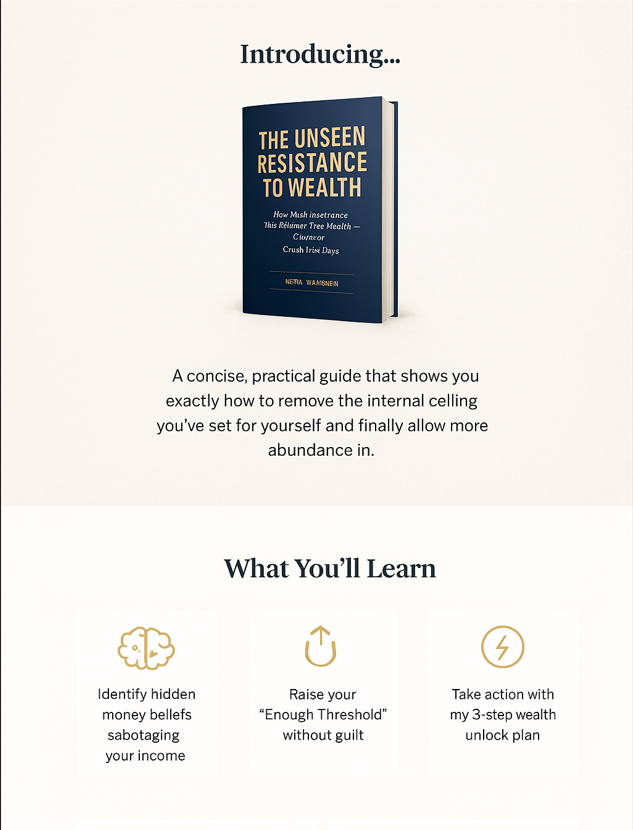
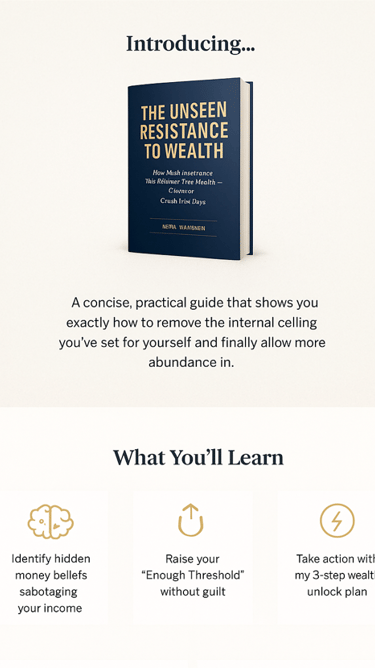
This is the conversation most people avoid, because it digs into uncomfortable insecurities, hidden fears, and secret cravings for power that we’re too proud to admit. But if you want to understand why you’re stuck financially—and how to break free—then you must face this head-on. “The Unseen Resistance to Wealth” is the best e-book on the subject, has shifted the mindset of thousands.
What Is Self-Concept and Why Does It Dictate Wealth?
Your self-concept is the mental picture you carry of who you are and what you deserve. It’s the set of beliefs that quietly governs your behavior, your expectations, and even your tolerance for wealth.
If you see yourself as someone who “just gets by,” you’ll unconsciously sabotage any chance of wealth that goes beyond survival.
If you view yourself as unworthy of abundance, you’ll reject opportunities—even while telling yourself you want them.
If you secretly believe that money is “bad” or “greedy,” you’ll push it away while claiming to chase it.
Think about it: a millionaire doesn’t just have more money—they have a different identity.
They don’t wake up thinking, “I hope I make rent this month.” They wake up thinking, “How do I grow my empire? How do I multiply resources? How do I create leverage?”
The self-concept of wealth operates on a completely different frequency than the self-concept of scarcity.
Let’s look at how self-concept shows up in real life:
1. The Under earner Trap
You get a raise, but within months, you find yourself back in debt. Not because the math doesn’t work, but because your self-concept doesn’t match the higher income level. You unconsciously spend more, make riskier decisions, or attract crises that bring you back down.
2. The “Almost There” Pattern
You land opportunities, you get close to success, but somehow things fall apart at the last minute. Why? Because your self-concept still says, “I’m not the kind of person who wins big.” You’ll sabotage the finish line to stay congruent with your identity.
3. The Guilt Complex
You want wealth, but deep down, you feel guilty about having more than your family, your friends, or your peers. So, every time you start to rise, your self-concept unconsciously shrinks back, not allowing you to surpass the tribe you’re loyal to.
These patterns aren’t about money management or strategy. They’re about identity management. Until your self-concept expands, your finances can’t.
4. The Hustler Identity
The hustler identity is built on the belief that self-worth comes from relentless work, where exhaustion is worn as a badge of honor and constant grind is seen as proof of strength. Hustlers pride themselves on sacrifice, independence, and being “the hardest worker in the room,” often showcasing their late nights, battle scars, and momentum as validation. While society glorifies this mindset as resilience and ambition, beneath it often lies fear of insignificance, scarcity thinking, and a craving for validation.
Empowering in its drive but destructive in its toll, the hustler identity becomes a trap—because once someone defines them by hustle, rest feels like failure and pennies become glory. This identity is contrary to the wealth mindset. How many wealthy individuals are hustlers? ask yourself.
The Dirty Secret: We Don’t Just Want Wealth, We Want Power
Here’s the part most people hesitate to admit—because it triggers shame and fear:
We don’t just want money. We want the power, recognition, and control that come with it.
Money is emotional. It’s tied to your sense of worth, your ability to say “yes” or “no,” your place in the social hierarchy; to deny that is to lie to yourself.
The person who claims, “I don’t care about money,” is usually the one most controlled by it—trapped in scarcity and resentment.
The person who secretly craves wealth often feels shame about admitting it, because society labels ambition as greed.
The person who achieves financial success must wrestle with their hidden craving for power: to dominate, to prove others wrong, to finally feel secure.
This is why wealth creation is not a financial game—it’s an emotional identity game. Until you face the messy truths about what money represents to you, you’ll never truly control it.
Talking about self-concept and wealth is risky, because it forces people to confront parts of themselves they’d rather keep hidden:
The pride that won’t ask for help, even if it costs you success.
The ego that insists you’re “already enough,” even while your bank account screams otherwise.
The fear that if you change, you’ll lose relationships, validation, or your place in the tribe.
But here’s the ultimate risk: if you don’t confront this, you’ll pay the price anyway.
You’ll pay it in the form of missed opportunities.
You’ll pay it in the form of constant financial stress.
You’ll pay it in the form of never experiencing the life you know you’re capable of (and for your family).
So what happens when you change your self-concept?
The under-earner becomes a wealth creator, not because they learned new tactics, but because they finally believe they belong at higher levels.
The “almost there” person starts finishing what they start, because success no longer feels like a betrayal of who they are.
The guilt-ridden achiever learns to outgrow their tribe without shame, creating wealth not as a betrayal but as an example.
This isn’t theory—it’s observable. Every person who has ever leaped from scarcity to abundance first changed their identity.
Here are 3 starting points to shift your self-concept
1. Audit Your Identity Beliefs
Write down what you really believe about yourself and money. Not what you say, but what you feel. Do you secretly believe wealth is for “others”? Do you think you’re unworthy of abundance? Face the raw truth.
2. Challenge the Emotional Narrative
Ask yourself: what emotions dominate my relationship with money—fear, guilt, pride, shame, or confidence? Until you untangle these emotions, wealth will always feel unsafe.
3. Step into a New Role
Start behaving as though you already are the person who attracts and manages wealth with ease. Identity shifts through action congruent with belief. The more you act from the identity you want, the faster your self-concept aligns.
This is exactly why I wrote my e-book.
Because wealth isn’t blocked by the economy, your boss, or your circumstances—it’s blocked by the liar within you, the illusions you cling to, and the price you refuse to pay.
In my e-book, I go deeper into:
The unconscious blocks that keep you poor
Why is your most expensive luxury
How to destroy illusions that stop you from creating the life you desire
The mental shifts required to finally align your self-concept with abundance
Final Truth: Your bank account is you
Let’s not sugarcoat it: until you expand your identity, your wealth will not expand.
The question is not: “How do I make more money?”
The real question is: “Who do I need to become to handle more wealth without sabotaging it?”
This might sting, but here’s the truth no one wants to hear:
Your current financial situation is not an accident. It’s not random. It’s not just bad luck.
It is the direct reflection of your self-concept.
If you want to change your bank account, you must change yourself.
If you want to rise in wealth, you must rise in identity.
If you want abundance, you must first believe you deserve it—and act accordingly.
If you’re ready to break this invisible ceiling, you’ll need more than motivation—you’ll need a system to identify and shatter the exact money blocks your self-concept is hiding behind.
That’s why I wrote my e-book. It dives deeper into these illusions and the practical steps to break free.
The choice is yours: stay in the identity that keeps you broke… or pay the price (start with less than $10) to step into the self-concept of wealth.
Rethink the internal process of wealth creation
Related articles:
Charisma, Character, and Personal Magnetism: Which One Do You Need?
Inside Out 2: Unlocking Levels of Consciousness
Would You Ask Your Worst Enemy for Help to Move Towards Your Goals?
7 Lessons from Wealthy People on Handling Failure with their Self-Concept
Julius Caesar's Magnetic Gaze: Power & Influence
Lazy but Ambitious: The Hidden Psychological Pattern Sabotaging Intelligent People
The Wealth Gap No One Talks About: Why Identity, Not Hard Work, Creates Millionaires
Why Your Self-Concept is Your Net Worth: The Hidden Psychology of Wealth Creation
How I Broke 13 Years of Money Blocks (And Why Most People Never Will)
theworld@inwithin.me
© 2025. All rights reserved.