Your Self-concept Generates Everything: Wealth, Abundance, Love, Relationships...
Transform Jealousy into Self-Worth
Discover how to understand and overcome jealousy. Learn the psychology behind jealousy and comparison, and reclaim your self-worth. Explore the roots of jealousy and transform it into purpose and direction.
Tal
1/11/20265 min read


Jealousy: The Emotion We Hate, Hide, and Secretly Obey
What jealousy really is, where it comes from, and how to stop letting it run your life?
Why are you indifferent when Jeff Bezos earns $20,000 per second but disgusted when your brother or colleague achieves something significant?
There are emotions we proudly claim, like ambition, love, discipline, and then there are emotions we deny, bury, and pretend we don’t feel. Jealousy sits at the top of that list.
No one wants to be “the jealous one.” It sounds weak, small, and immature.
So we rename it or disguise it.
We call it motivation.
We call it standards.
We call it being realistic.
But deep down, jealousy still whispers. This article is not here to shame you.
It’s here to tell you the truth you feel but never articulate, because if jealousy keeps appearing in your life, it’s not random.
It’s trying to show you something you’ve been avoiding.
And to understand it, we’ll start with a story.
A Story of Two Brothers
Let’s call him Daniel. he is the older brother.
He did everything “right.” Studied, followed the rules, took the safe path, and delayed pleasure, thinking that effort would eventually be rewarded.
His younger brother, Alex, didn’t.
Alex took risks, changed paths, failed publicly, and started again. He didn’t ask for permission. He didn’t wait for validation or certainty.
And now, years later, something feels… wrong.
Alex is winning.
Not just financially, but socially, creatively, energetically. People listen when he speaks.
Opportunities seem to find him.
Daniel tells himself he’s happy for him. But at night, when no one is watching, something tightens in his chest. Every achievement of his brother feels like an accusation.
“If he can do it, why haven’t I?”
That’s where jealousy lives.
Not in hatred, but in comparison.
What Jealousy Really Is (And What It Is Not)
Let’s strip away the moral judgment.
Jealousy is not:
Being a bad person
Wanting what others have
Proof that you are ungrateful
Jealousy is:
A signal of unexpressed desire
A mirror of abandoned potential
Pain caused by self-comparison without self-honesty
Jealousy isn’t about the other person. It’s about the version of you that never got to exist.
Daniel isn’t jealous of Alex’s success.
He’s jealous of Alex’s freedom; he never gives himself the chance to have or think he doesn’t have the capacity to; his boldness is his willingness to fail without self-betrayal.
That’s why jealousy hurts so deeply.
It points exactly to where you compromised yourself. And this bullet hits even harder when the point of reference is closer.
Where Jealousy Comes From: The Psychological Root
Jealousy is born at the intersection of identity and fear.
Here’s the pattern:
You suppress a desire.
You build an identity around “being realistic.”
Someone else lives what you denied yourself.
Your nervous system interprets it as a threat
Not a threat to survival—but to self-image.
“If they succeed, what does that say about me?”
For Daniel, his brother’s success threatens the story he told himself:
“I sacrificed more. I deserve more.”
Jealousy erupts when reality contradicts the story you live by.
The Silent Comparison Loop
Most people think jealousy happens consciously.
It doesn’t. It happens quietly, automatically, daily.
You scroll.
You observe.
You compare.
And without realizing it, you conclude:
“I’m behind.”
“I missed my chance.”
“They’re more talented.”
This is how jealousy hides—as emotional exhaustion.
Why We Hate Jealousy So Much
Because jealousy exposes three painful truths:
You want more than you admit
You settled somewhere
You blame circumstances instead of choices.
Jealousy removes excuses.
That’s why we attack it instead of listening to it.
But jealousy isn’t the enemy.
Avoiding it is.
The Difference Between Jealousy and Envy
This matters more than you think for healing.
Jealousy says: “I’m losing something.”
Envy says: “I want something.”
Envy can be clean.
Jealousy is tangled with fear.
Daniel isn’t just envious.
He’s afraid that his brother’s success proves something final about him.
That fear freezes growth.
How Jealousy Turns Toxic
Jealousy becomes destructive when it is unconscious.
Here’s how it mutates:
Into passive-aggressive comments
Into emotional withdrawal
Into superiority (“I’d never do it that way”)
Into self-sabotage
Daniel begins to downplay Alex’s achievements.
“He just got lucky.”
But luck isn’t what hurts.
What hurts is the possibility that he could have lived differently.
The Jealousy–Identity Conflict
Here’s the real conflict:
Jealousy forces a question you’ve avoided: “Am I living my truth—or the version that feels acceptable?”
Daniel realizes something disturbing: He didn’t choose safety because he valued peace.
He chose it because he feared judgment. His brother didn’t beat him.
His brother reminded him.
How to Deal With Jealousy (The Right Way)
Not by suppressing it, not by pretending you’re above it, but by decoding it.
Step 1: Stop Moralizing the Emotion
Jealousy is information—not a flaw.
The moment you judge it, you lose access to its message.
Step 2: Identify the Trigger
Ask:
Who triggers me the most?
Why them?
What do they represent?
Daniel realizes Alex represents the courage he postponed.
Step 3: Separate Desire From Comparison
You don’t want their life. You want your unlived version. This distinction changes everything.
Step 4: Grieve the Version of You That Didn’t Happen
This is the hardest part. Growth requires mourning:
Missed risks
Silenced instincts
Delayed dreams
Without grief, jealousy stays stuck.
Step 5: Convert Jealousy Into Direction
Jealousy shows you where to aim, not who to hate.
It’s a compass if you let it be.
What Happens When You Don’t Deal With Jealousy
You don’t become neutral, but become smaller.
Daniel notices:
He avoids conversations
He procrastinates more
He feels numb instead of inspired.
Unchecked jealousy slowly kills ambition.
Jealousy, Money, and Success
Many readers don’t realize this: Jealousy is deeply tied to money blocks and self-worth.
When you believe:
Success is scarce
Recognition is limited
There’s only room for one.
Jealousy thrives.
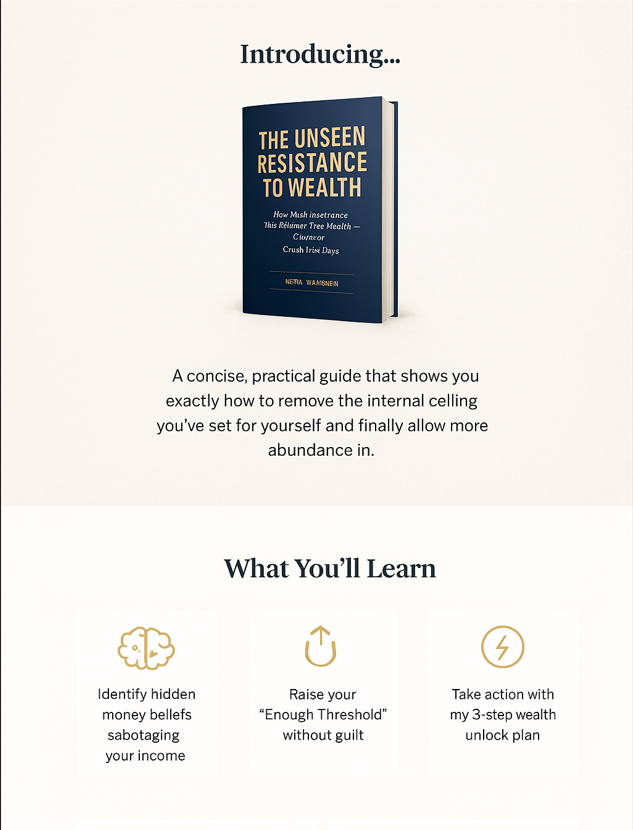
This is something I explore deeply in my work—especially in my ebook on money blocks and unconscious resistance, where jealousy often disguises itself as “realism.”
A lack of opportunity doesn’t block most people. They’re blocked by internal permission. Get it here and free yourself.
The Turning Point
Daniel doesn’t confront his brother. He confronts himself. For the first time, he admits:
“I didn’t fail. I avoided.” And that realization—painful as it is—frees him.
Jealousy loosens its grip the moment ownership replaces blame.
From Comparison to Creation
The opposite of jealousy isn’t gratitude.
It’s self-alignment.
When you start moving toward your truth:
Jealousy fades
Comparison loses relevance
Other people’s success stops feeling personal.
Daniel doesn’t become identical to his brother. He becomes honest with himself, and that was enough.
Why This Matters for You
If this article stirred discomfort, it did its job, because jealousy doesn’t want comfort. It wants integration.
Your jealousy is not random. It’s pointing to:
A desire you minimized
A truth you postponed
A version of you waiting for permission
And no one can give you that permission but you.
Final Truth
Jealousy isn’t telling you that you’re less. It’s telling you that you’re capable of more.
The question is whether you’ll listen—or keep numbing it with comparison.
If you’re ready to go deeper into the unconscious patterns that keep repeating in your life—especially around success, money, and self-sabotage—my eBooks were written for that exact confrontation.
Not motivation, not hype, but clarity because growth doesn’t begin when you feel good.
It begins when you stop lying to yourself.
Related articles:
Charisma, Character, and Personal Magnetism: Which One Do You Need?
I Thought Working Hard Was Hard — Until I Started Feeling My Feelings and Being Present
Would You Ask Your Worst Enemy for Help to Move Towards Your Goals?
7 Lessons from Wealthy People on Handling Failure with their Self-Concept
The Roadmap to Wealth and Fulfillment: Mastering Polarity, Awareness, and Inner Battles
The Wealth Gap No One Talks About: Why Identity, Not Hard Work, Creates Millionaires
Why Your Self-Concept is Your Net Worth: The Hidden Psychology of Wealth Creation
How I Broke 13 Years of Money Blocks (And Why Most People Never Will)
theworld@inwithin.me
© 2025. All rights reserved.