Your Self-concept Generates Everything: Wealth, Abundance, Love, Relationships...
Lazy but Ambitious: The Hidden Psychological Pattern Sabotaging Intelligent People
Lazy but ambitious explained: psychology of procrastination, perfectionism, shame cycles, narcissistic defense, and self-worth integration. Ambitious but stuck? This article explains the psychology behind chronic inaction—and why discipline can't fix it.
Tal
1/28/20264 min read


Lazy but Ambitious: The Hidden Psychological Pattern Sabotaging Intelligent People
Many intelligent, educated, and creative people quietly suffer from a painful contradiction: they feel deeply ambitious, yet struggle to take consistent action. They have big visions, sharp minds, and strong desires for success — but weeks turn into months of procrastination, self-criticism, and stalled progress.
This pattern is often mislabeled as laziness or lack of discipline. In reality, it is something far more complex and far more common.
Psychologists have identified this as a distinct psychological structure, not a character flaw. Understanding it is the first step toward breaking free.
What Does “Lazy but Ambitious” Really Mean?
The term lazy but ambitious describes people who:
Dream big and think long-term.
Feel capable of extraordinary success.
Constantly plan, research, and optimize
Yet struggle to sustain effort or complete meaningful work
This pattern affects an estimated 15–20% of intelligent, educated adults, especially those interested in self-development, entrepreneurship, creative work, or intellectual achievement.
It is not a lack of motivation.
It is a defense mechanism rooted in the psyche.
The Three Core Psychological Patterns
1. Grand Visions and Unsustainable Effort
People with this pattern often experience intense bursts of motivation. They start projects enthusiastically, work obsessively for a short period, then abruptly lose momentum.
The issue is not starting — it’s staying.
Once effort becomes repetitive, imperfect, or exposed to judgment, motivation collapses.
2. Obsession With Perfect Systems
“Once I find the right system, everything will click.”
This belief fuels endless consumption of:
Productivity methods
Routines
Courses
Strategies
Framework
The unconscious assumption is that success should feel effortless. Searching for the perfect system delays real exposure to failure while preserving hope.
3. Intense Shame Cycles
These individuals oscillate between two extremes:
Feeling destined for greatness
Feeling completely worthless
There is no realistic middle ground — no stable self-image based on effort and feedback.
This emotional swing creates deep shame, which further paralyzes action.
The Psychological Mechanisms Behind “Lazy but Ambitious”
Narcissistic Defense (Not Narcissism)
This is not arrogance — it is self-protection.
Taking real action risks, discovering personal limits, mediocrity, or failure. To protect a grand self-image, the psyche unconsciously avoids sustained effort.
As long as success remains in the future, it cannot be disproven.
Perfectionism as Emotional Armor
Producing good work is dangerous — it threatens the fantasy of perfection.
If something is never finished:
It cannot be judged
It cannot disappoint.
It can remain idealized.
Perfectionism here is not about excellence — it is about avoiding emotional injury.
Shame–Grandiosity Splitting
The psyche splits into two identities:
The future hero
The present failure
There is no integration. No continuity. Only fantasy or collapse.
This split keeps the person trapped in internal conflict.
Childhood Origins of the "Lazy but Ambitious" Pattern
This structure often forms in childhood when:
Parents idealize a child but fail to teach competence.
Our parents are emotionally unavailable or inconsistent
The child learns:
“I must be special to be worthy — but I don’t feel supported.”
Fantasy becomes a psychological refuge. Over time, the inner fantasy world feels safer and more validating than reality.
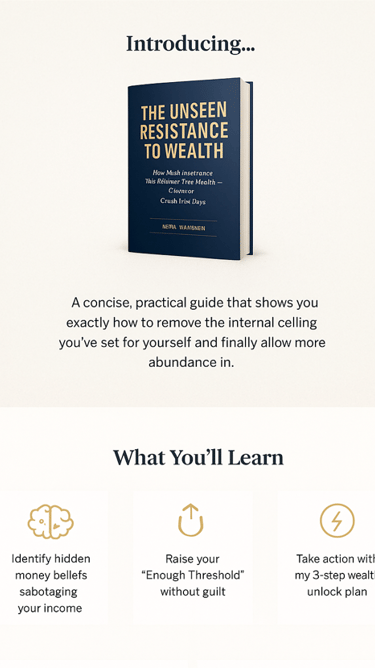
Learn the internal shift that lets you keep the wealth you make. Get your eBook here. “Worth thousands in internal shifts.
This is NOT a “how to get rich” book.
Inside, you’ll uncover:
The 15 hidden money blocks that intelligent people miss
Why jealousy, pride, and “being realistic” repel money
How self-worth integration changes behavior without affirmations
Why do effort and struggle keep you poor energetically
The identity conflict that silently cancels income growth
How unconscious counter-intentions sabotage goals
How dangerous are your questions? (and how it blocks authority)
The exact internal shift that unlocks ease, flow, and momentum
Once you see the pattern, you can’t unsee it.
This eBook isn't for readers. It's for people who are done fucking around with poverty, failed relationships, and mediocrity in a loop.
Fair warning: This isn't motivational. It's confrontational. It won't make you feel good. It'll make you feel exposed. But if you do the work? Everything changes. Still hesitating?
Why Fantasy Feels More Powerful Than Reality
Fantasy provides:
Recognition
Importance
Safety from judgment
For a child who lacked emotional validation, fantasy preserved self-worth. But what once protected the child eventually imprisons the adult.
Daydreams of future success replace grounded action.
Why Productivity Advice Doesn’t Work
Most productivity advice focuses on:
Discipline
Habits
Accountability
Time management
But this pattern is not behavioral — it is structural.
You cannot out-discipline a defense mechanism. Trying harder only deepens shame and reinforces avoidance.
The Real Problem
You want success without vulnerability.
You avoid action to protect your self-image.
You fear discovering you might be ordinary.
You keep ambition in fantasy where it can’t be disproven
This is not laziness.
It is the fear of inadequacy.
How to Break the Lazy-but-Ambitious Pattern
1. Presence
Presence dismantles fantasy.
Practices that work:
Radical acceptance
Slow breathing (10 minutes)
Relaxing facial muscles (Mandatory)
Emotional awareness without escape
Presence grounds identity in reality.
2. Character Building Through Immediate Action
Do what must be done — immediately.
Simply put, do whatever you have to do right away without hesitation. Curate everything to your priority.
Character is built by choosing reality over imagination.
3. Self-Worth Integration
Self-worth integration means your value is no longer tied to:
Outcomes
Validation
Speed
Perfection
You act as if worth is already settled.
“Even if none of this works, I remain whole.”
When integrated:
Failure doesn’t collapse you.
Success doesn’t inflate you.
Self-respect remains intact regardless of results.
This is the opposite of narcissistic defense.
This is psychological maturity.
Conclusion
The way out of the “lazy but ambitious” trap is not motivation, hacks, or discipline.
It is the destruction of the grandiose fantasy identity — and the integration of a grounded, resilient self that can tolerate imperfection.
Painful? Yes.
Necessary? Absolutely.
Liberating? Completely.

Related articles:
Charisma, Character, and Personal Magnetism: Which One Do You Need?
I Thought Working Hard Was Hard — Until I Started Feeling My Feelings and Being Present
Would You Ask Your Worst Enemy for Help to Move Towards Your Goals?
7 Lessons from Wealthy People on Handling Failure with their Self-Concept
The Roadmap to Wealth and Fulfillment: Mastering Polarity, Awareness, and Inner Battles
The Wealth Gap No One Talks About: Why Identity, Not Hard Work, Creates Millionaires
Why Your Self-Concept is Your Net Worth: The Hidden Psychology of Wealth Creation
How I Broke 13 Years of Money Blocks (And Why Most People Never Will)
theworld@inwithin.me
© 2025. All rights reserved.