Your Self-concept Generates Everything: Wealth, Abundance, Love, Relationships...
Are We Obligated to Improve Ourselves? “Go hard or go home !!! I choose to go home.”
Tal
5/14/20262 min read


The exhausted, overstretched, relentlessly optimized modern person wants to answer no — and to be left alone.
Neither answer is honest. And the question deserves more than a reaction.
Immanuel Kant — not known for his warmth, but extensively known for his precision — argued that self-improvement is not merely advisable. It is a moral obligation. Specifically, an obligation each person owes to themselves. Not to God, not to society, not to their family — to the self.
This is a serious philosophical claim. It means that the person who chooses permanent stagnation — who refuses to examine, develop, or expand their capacity for living — is not simply making a lifestyle choice. They are, in Kant’s framework, failing a duty. The same way they might fail a duty to another person.
Before you object, consider the argument from the other direction.
For Aristotle, the question was not whether you are obligated to improve but whether you are living in accordance with your nature as a human being. The person’s acts are relevant to moral growth — one’s actions returnto affect the core of the self. A person can become what their actions make them.
In other words, you are not improving toward some external standard. You are becoming — or failing to become — the thing you actually are. Every choice you make returns to shape the self that makes the next choice. There is no neutral ground. You are either becoming more fully yourself, or you are becoming less.
This reframes the obligation entirely. It is not the obligation of a student to follow a demanding curriculum. It is the obligation of a seed to its own nature — the quiet, constant pressure of something that has a direction and suffers when it is prevented from moving in it.
Your drive for self-enhancement is closely tied to moral obligations, influencing your moral compass and shaping your social relationships. Growth is not private. The person you become — or fail to become — touches everyone within your radius. The parent who does not examine their wounds passes them architecturally to their children. The leader who does not develop their capacity for honest self-reflection scales their blind spots across an entire organization. The friend who never grows remains a mirror that only reflects the past.
But here is where the question turns genuinely difficult — and where most self-improvement writing quietly looks away.
The obligation cannot be what the industry sells. The obligation cannot be relentless optimization, perpetual discomfort, the Protestant theology of hustle dressed in the language of potential. That version of self-improvement is not growth. It is self-punishment with a better marketing budget. It mistakes motion for direction and exhaustion for virtue.
The real obligation — if there is one — is something quieter and more demanding than any course or challenge or morning routine. It is the obligation of honesty. To examine, with genuine courage and genuine patience, who you are and where you are failing the life that is specifically yours to live. Not someone else’s benchmark. Yours.
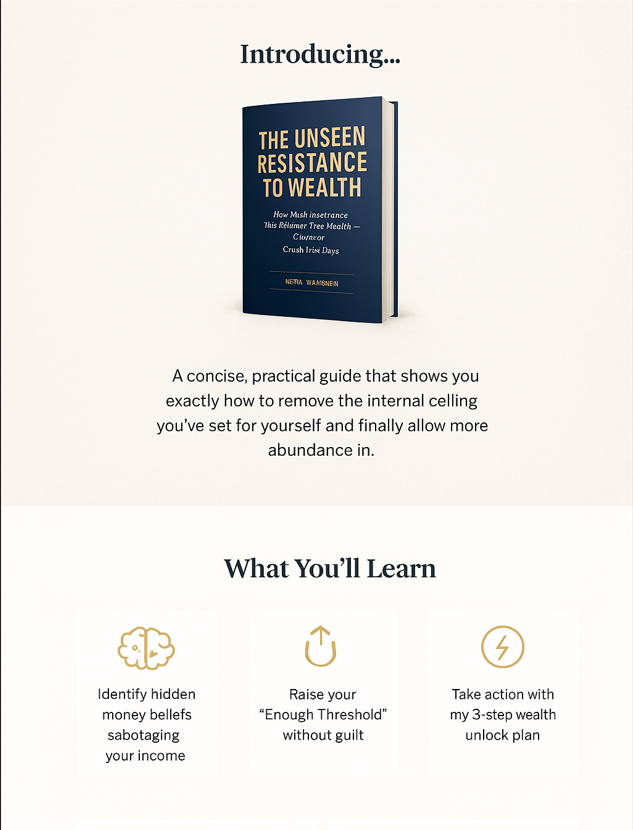
This is why Brooke Davis, in his ebook “The Unseen Resistance to Wealth,” did a thorough examination of the emotional identity of his 09 years of failures.
You are not obligated to become impressive. You are not obligated to perform growth for an audience or optimize yourself into someone unrecognizable.
Related articles:
Charisma, Character, and Personal Magnetism: Which One Do You Need?
Inside Out 2: Unlocking Levels of Consciousness
Would You Ask Your Worst Enemy for Help to Move Towards Your Goals?
7 Lessons from Wealthy People on Handling Failure with their Self-Concept
Julius Caesar's Magnetic Gaze: Power & Influence
Lazy but Ambitious: The Hidden Psychological Pattern Sabotaging Intelligent People
The Wealth Gap No One Talks About: Why Identity, Not Hard Work, Creates Millionaires
Why Your Self-Concept is Your Net Worth: The Hidden Psychology of Wealth Creation
How I Broke 13 Years of Money Blocks (And Why Most People Never Will)
theworld@inwithin.me
© 2025. All rights reserved.