Your Self-concept Generates Everything: Wealth, Abundance, Love, Relationships...
Are You Loved — or Taken Advantage Of?
The most dangerous relationships are not the ones where you know you are being used. They are the ones where you genuinely cannot tell
Tal
5/28/20264 min read


Here is the question most people cannot answer honestly — not because they lack intelligence, but because the nervous system that would give them the honest answer is the same one that has been trained to survive the relationship by not asking it.
So ask it now, plainly, without the defenses that usually arrive before the question finishes forming.
When you give in this relationship, your time, your energy, your patience, your resources, your emotional availability — does what returns feel like reciprocity? Or does it feel like management?
There is a difference. And your body already knows which one it is living inside.
From a psychological viewpoint, relationships where one party is being used often involve manipulation and emotional exploitation — with manipulators using tactics such as guilt, shame, and intimidation to control their partners, leading to a decrease in the victim's self-esteem and self-worth over time.
The decrease is the diagnostic. Not the dramatic moments — the accusations, the arguments, the obvious infractions. Those are easy enough to identify and, if the relationship is otherwise compelling, easy enough to explain away. The real signal is the cumulative erosion. The slow, consistent deflation of your sense of your own worth that happens in proximity to someone who is taking more than they are giving — and doing it with enough plausible deniability that you spend more energy defending them to yourself than they spend considering your needs.
Genuine love has a specific quality that exploitation cannot replicate: it makes you more yourself over time. Not more accommodating, not more careful, not more skilled at managing someone else's emotional weather — more yourself. More expanded, more confident in your own perception and your own worth. Romantic relationships perceived as valuable by both partners are associated with significant improvements in mental health, including decreased depression, anxiety, and loneliness. The keyword is both. A relationship that improves one person's mental health while eroding the other's is not a relationship. It is an arrangement — and only one party knows the terms.
The reason people remain in exploitation without naming it is not naivety. It is something more structurally embedded. Individuals who are addicted to love are more likely to prioritize maintaining their relationships over their own well-being when relationship interests and self-interests conflict — and even in unhealthy relationships, they may consciously or unconsciously ignore signs of relationship dysfunction to gain emotional support from their partner.
The emotional support is real. The love feels real. The connection — intermittent, unreliable, delivered in precisely the doses required to maintain the attachment — feels genuinely like love precisely because it activates the same neural circuitry. The nervous system does not distinguish between love that is freely given and love that is strategically withheld and released. It simply registers the presence and absence of warmth and organizes the entire personality around maximizing the presence.
This is why the question is so hard to answer. You are not confused about whether they have ever loved you. You are confused about whether the love they offer is something that serves you — or something that serves them. And it takes time to come to that question.
People with high empathy and low assertiveness are particularly vulnerable to exploitation — consistently putting more into the relationship than the other person in terms of time, resources, and emotional support.
High empathy. Low assertiveness. That combination does not make you weak. It makes you extraordinary in the precise dimensions that some people find useful rather than cherished.
The person who cherishes you does not require your smallness to feel significant. They do not need your uncertainty to feel secure. They do not disappear when you have needs and reappear when they do.
And here is what connects love to every other area where this pattern lives: the same tolerance that keeps you in a relationship where you give more than you receive is the same tolerance keeping you financially, professionally, and creatively beneath your actual capacity. The internal ceiling that says this is enough, this is what I get, wanting more is dangerous does not stay in the bedroom. It spreads.
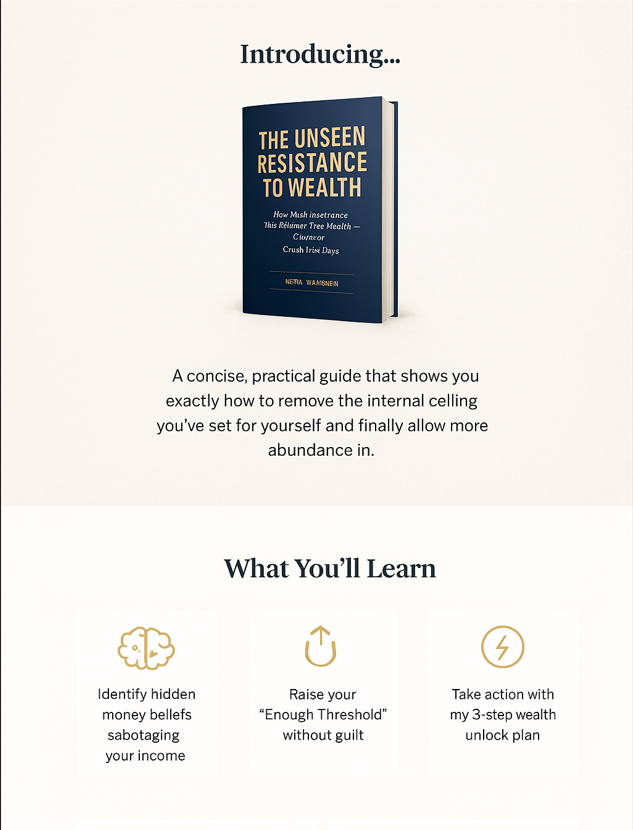
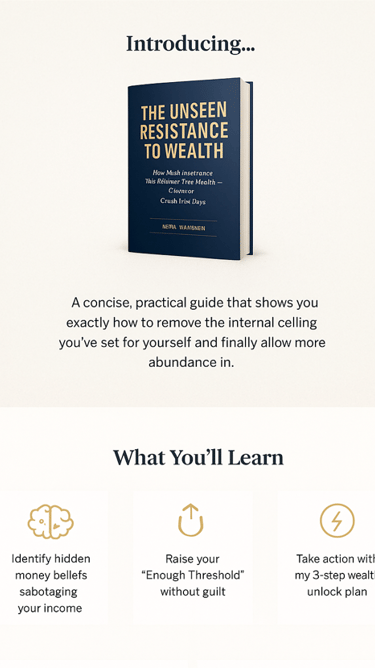
The Unseen Resistance To Wealth — How Much Is Too Much For You? addresses exactly this architecture — the internal agreement to receive less than you are worth, in every domain of your life. Because the person who finally decides they deserve to be loved — not used — rarely stops that decision at the relationship. [Link]
You deserve the kind of love that does not require you to audit whether it is real.
If you are still auditing — you already have your answer.
Related articles:
Charisma, Character, and Personal Magnetism: Which One Do You Need?
Inside Out 2: Unlocking Levels of Consciousness
Would You Ask Your Worst Enemy for Help to Move Towards Your Goals?
7 Lessons from Wealthy People on Handling Failure with their Self-Concept
Julius Caesar's Magnetic Gaze: Power & Influence
Lazy but Ambitious: The Hidden Psychological Pattern Sabotaging Intelligent People
The Wealth Gap No One Talks About: Why Identity, Not Hard Work, Creates Millionaires
Why Your Self-Concept is Your Net Worth: The Hidden Psychology of Wealth Creation
How I Broke 13 Years of Money Blocks (And Why Most People Never Will)
theworld@inwithin.me
© 2025. All rights reserved.