Your Self-concept Generates Everything: Wealth, Abundance, Love, Relationships...
Nobody Taught You How to Fight in a Relationship. That Is Why You Keep Having the Same Argument.
Why do couples keep having the same argument in their relationship? 69% of relationship conflicts never get resolved.
Tal
8/6/20264 min read


You have had this argument before.
Not a similar one. This exact one — same trigger, same escalation, same positions, same exhausted silence at the end where nothing has been resolved and both of you are quietly wondering if this is just how it is going to be forever.
Here is the news that will either deeply comfort you or deeply disturb you, depending on where you are right now.
It is not going to get resolved. And that is not the problem you think it is.
Around 69 percent of the conflict in committed relationships is what researchers call perpetual — meaning it grows out of lasting differences in personality, needs, or values rather than a problem with one tidy solution. Most couples are not arguing because something has gone wrong. They are arguing because they are two different people who care about different things, and some of those differences simply do not dissolve.
Imagine being in a relationship with a 5'1" partner when you’ve had a crush on tall basketball players since you were twelve. You might not realize it, but a lot of the underlying tension in your relationship stems right from that unexamined gap between your ideal and your reality. But how is he supposed to "solve" a problem rooted in something he can't change?
Sixty-nine percent. More than two thirds of every argument you will ever have in a committed relationship is not solvable in the conventional sense. Not because you chose wrong. Not because you communicate poorly. Because you are a human being in a relationship with another human being, and human beings carry fundamentally different internal worlds that do not merge simply because they signed something or said something at an altar.
The argument about money is not about money. It is about security versus freedom — two legitimate human needs in genuine tension. The argument about time is not about the calendar. It is about autonomy versus togetherness — both real, both valid, both impossible to fully satisfy simultaneously. The argument about the dishes is famously never about the dishes.
Where couples go wrong is treating every recurring fight as something that needs to be fixed. When a perpetual problem does not get solved, frustration builds and resentment follows — what Gottman calls gridlock, the point where both partners feel stuck, unheard, and hopeless about change. Pushing harder for resolution on these issues often makes things worse, not better.
Here is the skill nobody taught you. The goal of a productive fight is not to win. It is not even to resolve. It is to understand — specifically, to get curious about what the argument means to your partner at the level underneath the surface content. Every recurring conflict carries something deeper for each person: a value, a fear, a need, a history that arrived in the relationship long before the two of you met.
The partner who panics about money is not being irrational. They are carrying a specific emotional memory of what financial instability felt like — in their body, in their childhood, in some chapter of their life that the current argument is activating without either of you realizing it. The partner who needs more alone time is not being rejecting. They are managing a nervous system that experiences sustained togetherness as depletion — not because of you, but because of how they are wired.
When you stop trying to win the argument and start asking what the argument means to them — genuinely, curiously, without the agenda of proving your own point — the entire quality of the conflict changes. The shift that functional couples make is subtle but powerful: with perpetual problems, the goal moves from winning the argument to understanding the dream behind it.
The dream behind it. That is the actual conversation. The one underneath the argument you keep having. The one that would finally move something if either of you could find it and stay with it long enough to let the other person really hear it.
You were never taught to fight because the culture around relationships treats conflict as failure rather than intimacy. Two people who never argue are not necessarily more compatible — they are more avoidant. The argument, navigated with genuine skill and genuine curiosity, is one of the most direct routes to knowing another person fully. It is where the performance ends and the real person appears.
The same argument keeps happening because the real conversation underneath it has never been had.
Have that conversation. Not the one about the dishes. The one about what the dishes mean.
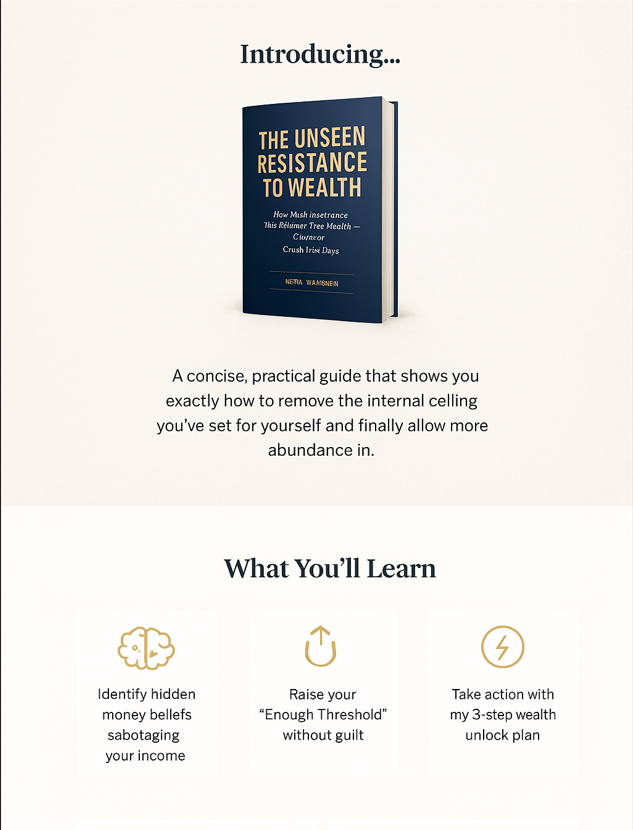
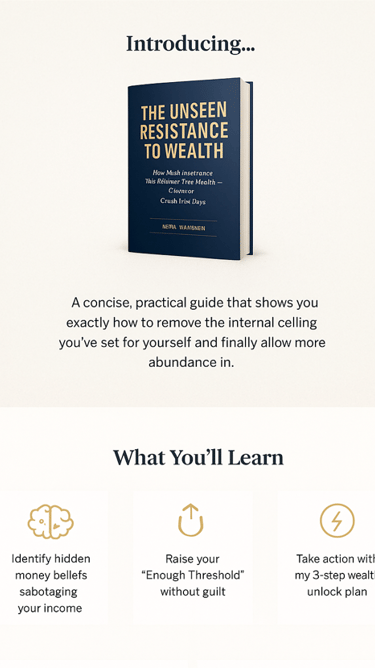
The Unseen Resistance To Wealth — How Much Is Too Much For You? addresses the specific argument most couples avoid entirely — money. Not the budget conversation, but the emotional one underneath it: what each person believes about wealth, deserving, safety, and how much is too much to ask for. Because the financial argument in most relationships is the perpetual problem nobody ever names correctly.
The argument is not the enemy. The avoidance of what it is actually about is.
Related articles:
Charisma, Character, and Personal Magnetism: Which One Do You Need?
Inside Out 2: Unlocking Levels of Consciousness
Would You Ask Your Worst Enemy for Help to Move Towards Your Goals?
7 Lessons from Wealthy People on Handling Failure with their Self-Concept
Julius Caesar's Magnetic Gaze: Power & Influence
Lazy but Ambitious: The Hidden Psychological Pattern Sabotaging Intelligent People
The Wealth Gap No One Talks About: Why Identity, Not Hard Work, Creates Millionaires
Why Your Self-Concept is Your Net Worth: The Hidden Psychology of Wealth Creation
How I Broke 13 Years of Money Blocks (And Why Most People Never Will)
theworld@inwithin.me
© 2025. All rights reserved.