Your Self-concept Generates Everything: Wealth, Abundance, Love, Relationships...
The Caprices Women Show When They Have Given Up Asking Directly in Relationship
She Does Not Want to Fight. Women Want to Be Reached. She Is Not Being Difficult. She Is Telling You Something She Does Not Know How to Say. Signs a woman needs attention in a relationship
Tal
8/8/20264 min read


She will never say I need more of your attention.
Not because the need is not real — it is completely real. But because asking directly feels too exposed, too needy, too much like handing someone the exact information required to disappoint her on purpose. So the need finds another exit. And it comes out sideways, in behaviors that both partners recognize and neither fully understands.
Here are the actual ones. Named directly, explained honestly, without judgment for anyone involved.
She picks a fight about something trivial. The classic. The dishes, the tone of voice, the way he answered a question three days ago. Dissatisfaction with the relationship, lack of shared time, emotional neglect, and a lack of partner attention can all provoke emotional conflict — the surface argument is rarely about its stated content. The dishes are not about the dishes. They are about the week he was mentally absent, the dinner she sat through alone, the accumulation of moments she felt invisible. The dish is simply the first available container for a feeling that has been building pressure for longer than anyone wants to admit.
She goes quiet. Not the peaceful quiet of someone who is content. The specific, weighted silence that communicates volumes without saying a word. She answers in monosyllables. She stops initiating. She pulls back her warmth by precise degrees — enough to be felt, not enough to be directly addressed. This is not manipulation in the calculated sense. It is the withdrawal of someone testing whether her absence registers. Whether he notices. Whether she matters enough to be pursued.
She induces jealousy. Research identifies five specific techniques: mentioning someone who showed interest, talking about an ex, flirting visibly in his presence, exaggerating another person's appeal, or creating the impression of being wanted elsewhere. Studies show that men who care about a woman usually increase their involvement in response to jealousy — men's most common response to perceiving a rival was to lavish time and attention on the woman they did not want to lose. She is not trying to be cruel. She is activating the one mechanism she has learned reliably produces the attention she needed but could not request.
She fishes for reassurance. The repeated question that sounds like vanity but is actually anxiety. Do you still find me attractive? Do you think she is prettier than me? Did you even notice what I was wearing? Each question is a small test of the same large fear — that she is becoming invisible to the person whose gaze matters most. The reassurance she is seeking is not about appearance. It is about significance.
She dramatizes. Exaggeration is a tool attention-seeking individuals use to provoke reactions — a deep need for validation and recognition often drives it, amplifying experiences or emotions to create a response that demands attention. The minor inconvenience becomes a crisis. The small pain becomes an emergency. Not because she is dishonest but because she has learned that ordinary expression of need produces ordinary response — and ordinary response is not enough when the underlying need is significant.
She becomes irritable without explanation. Short-tempered at small things, inexplicably cold, easily frustrated by interactions that would normally pass without comment. This is the body's overflow system — the emotional pressure of an unmet need venting through the nearest available valve.
Every single one of these behaviors is saying the same thing in a different dialect: I need you to reach for me. I need to know I am still your priority. I need to feel like I matter to you in the ordinary moments, not only the important ones.
The behaviors are not admirable strategies. The need underneath them is completely legitimate.
The partner who responds to the behavior — defending against the accusation about the dishes, withdrawing from the silence, getting competitive about the jealousy — will fight this war indefinitely and never reach the peace. The partner who responds to the need — who asks, simply and genuinely, what do you actually need from me right now — ends the war before it starts.
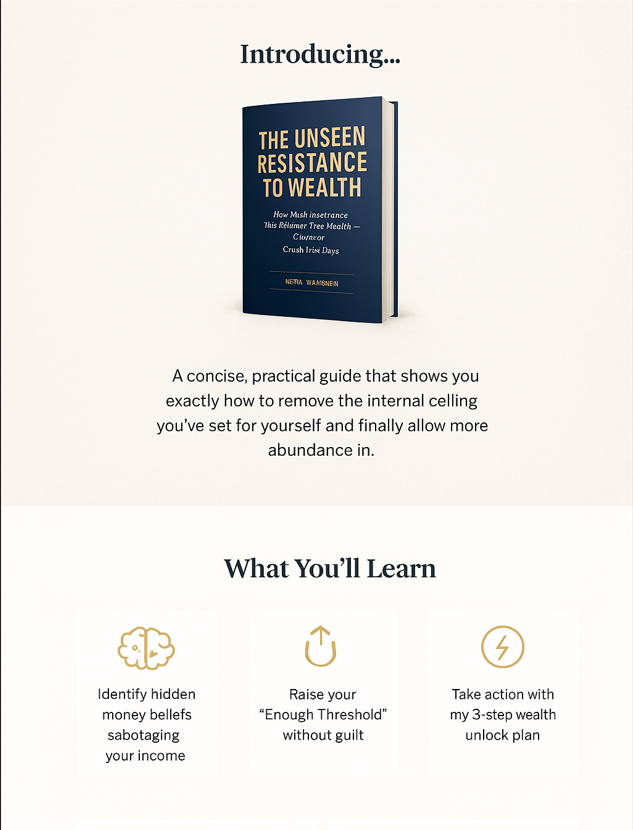
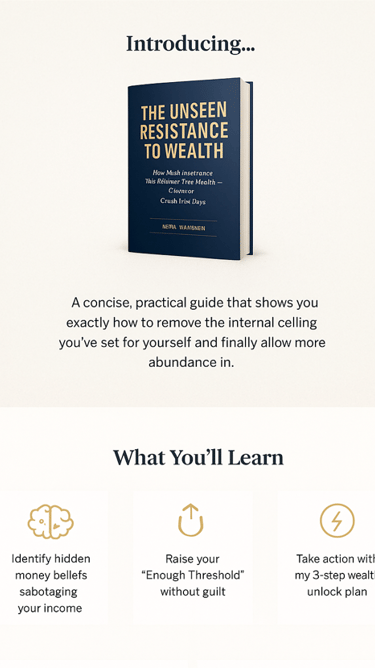
The Unseen Resistance To Wealth — How Much Is Too Much For You? addresses the same indirect communication around financial needs — what people do when they need more and cannot ask for it directly, in love and in wealth simultaneously. Because the inability to ask for what you need does not stay in the relationship. It lives in your bank account too.
She is not being difficult. She is being human in the specific way that happens when direct feels too dangerous and silence feels too invisible.
Learn the language. It is not that complicated once you know what is being said.
Related articles:
Charisma, Character, and Personal Magnetism: Which One Do You Need?
Inside Out 2: Unlocking Levels of Consciousness
Would You Ask Your Worst Enemy for Help to Move Towards Your Goals?
7 Lessons from Wealthy People on Handling Failure with their Self-Concept
Julius Caesar's Magnetic Gaze: Power & Influence
Lazy but Ambitious: The Hidden Psychological Pattern Sabotaging Intelligent People
The Wealth Gap No One Talks About: Why Identity, Not Hard Work, Creates Millionaires
Why Your Self-Concept is Your Net Worth: The Hidden Psychology of Wealth Creation
How I Broke 13 Years of Money Blocks (And Why Most People Never Will)
theworld@inwithin.me
© 2025. All rights reserved.