Your Self-concept Generates Everything: Wealth, Abundance, Love, Relationships...
What Would Happen to Society If Everyone Said Exactly What They Were Thinking?
A world where everyone says exactly what they think sounds like freedom. Psychology says it would be something closer to collapse — and the reason reveals everything about how society actually works.
Tal
5/12/20263 min read


No more polite fictions, no more managed impressions, no more sitting across from someone and performing interest while thinking something entirely different. Just — truth. Raw, unfiltered, immediate. Everyone saying what they actually think, all the time, without the elaborate social machinery of tact and omission and strategic vagueness that governs almost every human interaction you have ever had.
Society does not run on truth. It runs on the shared, largely unconscious agreement to withhold most of it.
Honest behavior is not a single behavior focused on truth-telling — it is a broader relational act of communication that is always embedded in context, relationship, and consequence.
The Carnegie Mellon researchers said, “What you think, said without calibration, is not automatically useful, kind, or even accurate. It is simply what you think, which is a product of your mood, your biases, your unprocessed history, and the specific neurological state you happen to be in at that particular moment.
Here is what the research on prosocial lying reveals that most people find genuinely disturbing. Prosocial liars who provided overly positive feedback were judged as more moral than honest feedback providers.
People prefer honesty for themselves in the abstract and prefer kind distortion in practice — especially for vulnerable recipients. The lie, in these contexts, is not corruption. It is care. It is the recognition that truth, delivered without consideration of timing, relationship, and emotional readiness, can be a weapon wielded under the banner of virtue.
A world of total radical honesty would not produce authentic connection. It would produce a constant, unmediated collision of unprocessed inner states — because most of what people are thinking at any given moment is not wisdom. It is fear, comparison, irritation, desire, the residue of yesterday’s argument, the anxiety about tomorrow’s meeting. Lying, harmless white lies are so common that they can be considered a condition of life and part of human nature, a quick survival tool that provides protection.
Remove that protection simultaneously from eight billion people, and what you have is not a more honest world. You have a world where every insecurity is spoken before it is examined, every prejudice is voiced before it is questioned, and every fleeting cruelty arrives without the buffer of reflection that turns a destructive impulse into a withheld one.
But here is the harder truth underneath the obvious one.
The problem is not that people say too much. It is that they say the wrong things — the performance, the pleasantry, the managed impression — and withhold the right ones. The fear. The actual need. The thing that would genuinely connect two people if either of them could find the courage to say it.
Total honesty would destroy society as it currently exists. But the particular dishonesty most people practice — performing fine when they are drowning, performing strength when they need help, performing certainty when they are lost — is already destroying them quietly, one withheld truth at a time.
The question was never whether everyone should say everything they think. The question is whether you are saying the things that actually matter — the ones that cost something to say, the ones that would change everything if the right person finally heard them.
That specific honesty is not dangerous. It is the only thing that has ever made two people genuinely real to each other.
And most people will go their entire lives without risking it.
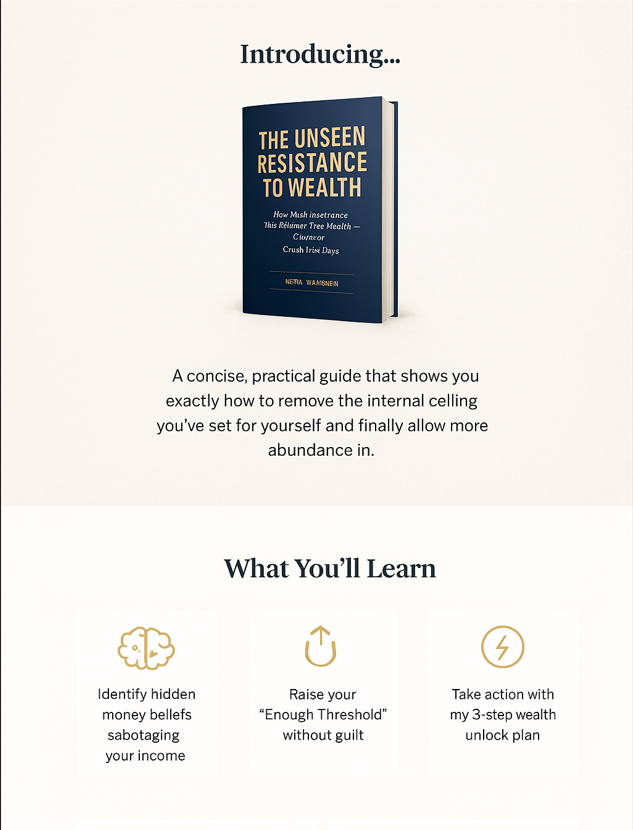
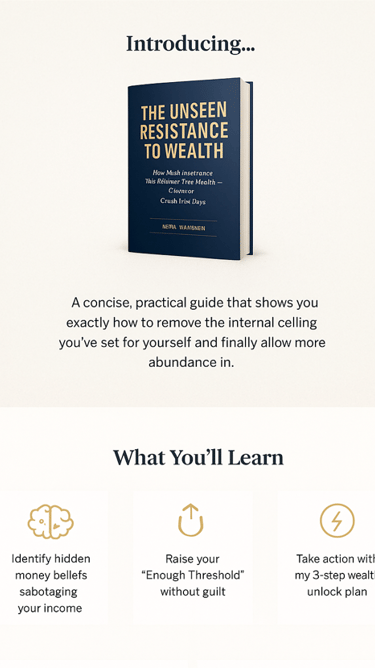
“The Unseen Resistance To Wealth” by Brooke Davis.
This book doesn’t motivate you. It removes the invisible ceiling you’ve imposed and normalized on yourself.
If you’re ready to stop under-living your potential — go deeper.
Related articles:
Charisma, Character, and Personal Magnetism: Which One Do You Need?
Inside Out 2: Unlocking Levels of Consciousness
Would You Ask Your Worst Enemy for Help to Move Towards Your Goals?
7 Lessons from Wealthy People on Handling Failure with their Self-Concept
Julius Caesar's Magnetic Gaze: Power & Influence
Lazy but Ambitious: The Hidden Psychological Pattern Sabotaging Intelligent People
The Wealth Gap No One Talks About: Why Identity, Not Hard Work, Creates Millionaires
Why Your Self-Concept is Your Net Worth: The Hidden Psychology of Wealth Creation
How I Broke 13 Years of Money Blocks (And Why Most People Never Will)
theworld@inwithin.me
© 2025. All rights reserved.