Your Self-concept Generates Everything: Wealth, Abundance, Love, Relationships...
You Still Love Them. You Just Haven't Liked Them in a While. And Nobody Tells You What to Do With That
When liking erodes without love disappearing, the person is left in the most confusing relational territory that exists, too in love to leave, too disconnected to feel fully alive inside the relationship.
Tal
8/7/20263 min read


Nobody prepares you for this specific confusion.
Not the dramatic falling out of love that movies choreograph so clearly. Not the obvious incompatibility that makes leaving feel logical. This quieter, stranger thing — where the love is genuinely still there, real and persistent and occasionally inconvenient, and the liking has quietly gone somewhere you cannot locate.
You love them. You are just not sure you enjoy them anymore.
And because there is no socially acceptable script for this — because the only options the culture offers are happy relationship or leave — you sit with it in silence, wondering if something is broken in you, in them, or in the whole arrangement.
Nothing is broken. But something is being ignored that deserves a direct conversation.
Psychologists have understood since the 1970s that love and liking are genuinely different psychological experiences — not points on the same spectrum but distinct emotional states that can exist independently of each other. Romantic love includes three main components — attachment, caring, and intimacy — and does not require constant affection or admiration to persist. Love, in other words, can endure long stretches of disconnection, frustration, and daily incompatibility because it is rooted in something deeper than the quality of Tuesday afternoon together.
Liking, however, lives entirely in Tuesday afternoon.
Liking someone is tied to compatibility, mutual respect, and how they make you feel in everyday life. You might care deeply for a romantic partner but no longer enjoy their presence due to constant conflicts. Liking requires the daily texture of the relationship to feel positive — the humor, the ease, the specific pleasure of their company when nothing important is happening. When that texture erodes, love remains but something essential goes missing. The relationship starts to feel like a commitment being honored rather than a connection being lived.
This distinction matters enormously — because the treatment for each is completely different.
The person who has fallen out of love needs a different conversation than the person who loves genuinely but has lost the thread of friendship. And most couples, sitting in the second situation, misdiagnose it as the first — and either catastrophize toward ending what could be rebuilt, or suppress the feeling entirely and call that loyalty.
The Gottmans found that liking your partner is crucial to a relationship — their Sound Relationship House incorporates liking in the foundational components of building love maps and sharing fondness and admiration. These components encourage you to discover, understand, and grow fond of your partner, including the quirks that may annoy you.
The liking can return. It is not a fixed quantity distributed at the beginning of a relationship and slowly consumed. It is a renewable resource — rebuilt through the specific daily practices of genuine curiosity, shared humor, and the deliberate decision to see your partner as a person rather than a fixture in your life.
But it requires naming what has happened first. Which is the conversation almost nobody has.
Saying I love you but I have not liked you lately is one of the most vulnerable and most necessary sentences in a long-term relationship. It is not an accusation. It is an honest account of a distance that both people can feel and neither has named — and naming it is the only thing that makes closing it possible.
The love did not leave. The friendship got buried under the routine, the stress, the accumulated weight of two people moving through life in such close proximity that they stopped being interesting to each other.
Dig it up. It is still there.
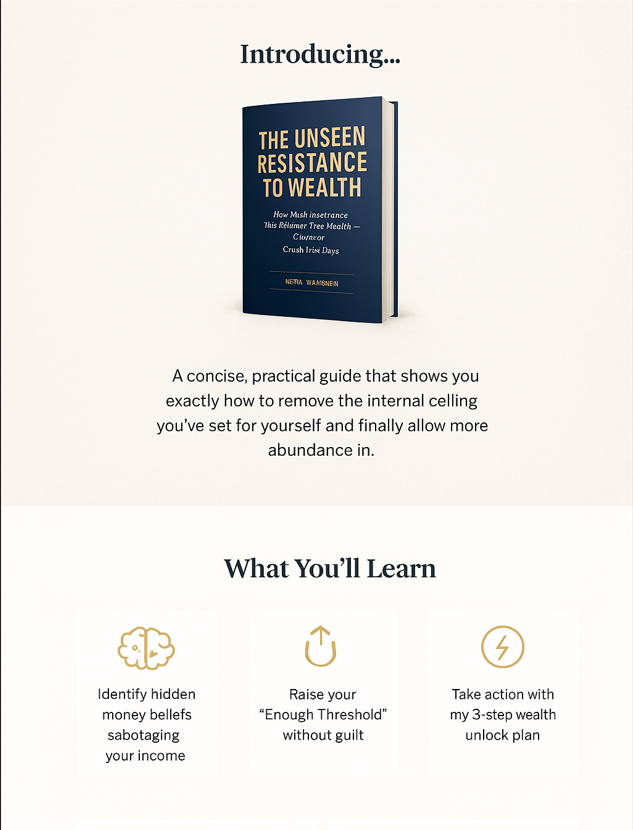
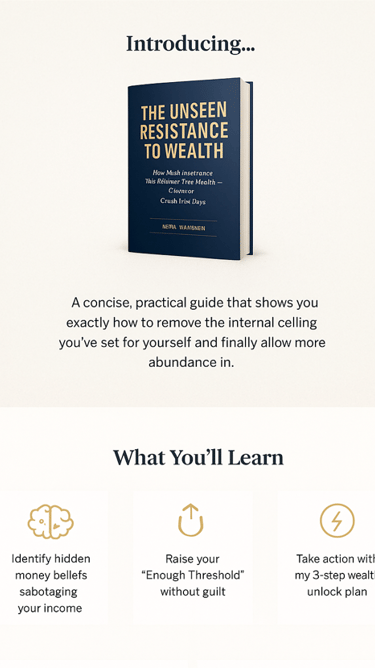
The Unseen Resistance To Wealth — How Much Is Too Much For You? examines a related dynamic — the long-term relationship with money where the initial drive is present but the daily liking of the process has disappeared, leaving a person going through financial motions without genuine engagement. Because you can be committed to wealth-building and completely disconnected from the joy of it — and that disconnection has consequences.
Related articles:
Charisma, Character, and Personal Magnetism: Which One Do You Need?
Inside Out 2: Unlocking Levels of Consciousness
Would You Ask Your Worst Enemy for Help to Move Towards Your Goals?
7 Lessons from Wealthy People on Handling Failure with their Self-Concept
Julius Caesar's Magnetic Gaze: Power & Influence
Lazy but Ambitious: The Hidden Psychological Pattern Sabotaging Intelligent People
The Wealth Gap No One Talks About: Why Identity, Not Hard Work, Creates Millionaires
Why Your Self-Concept is Your Net Worth: The Hidden Psychology of Wealth Creation
How I Broke 13 Years of Money Blocks (And Why Most People Never Will)
theworld@inwithin.me
© 2025. All rights reserved.